

Dachshunds may be small in size, but don’t let their short legs fool you. These energetic little dogs were originally bred in Germany to hunt badgers and other burrowing animals. They have impressive stamina, sharp instincts, and a curious nature that loves to explore.
At the same time, Dachshunds have one important physical characteristic that requires special care—their long backs. Because the breed is prone to Intervertebral Disc Disease (IVDD), exercise should be balanced, safe, and appropriate for their age and fitness level.
Keeping Your Long-Haired Friend Active and Healthy
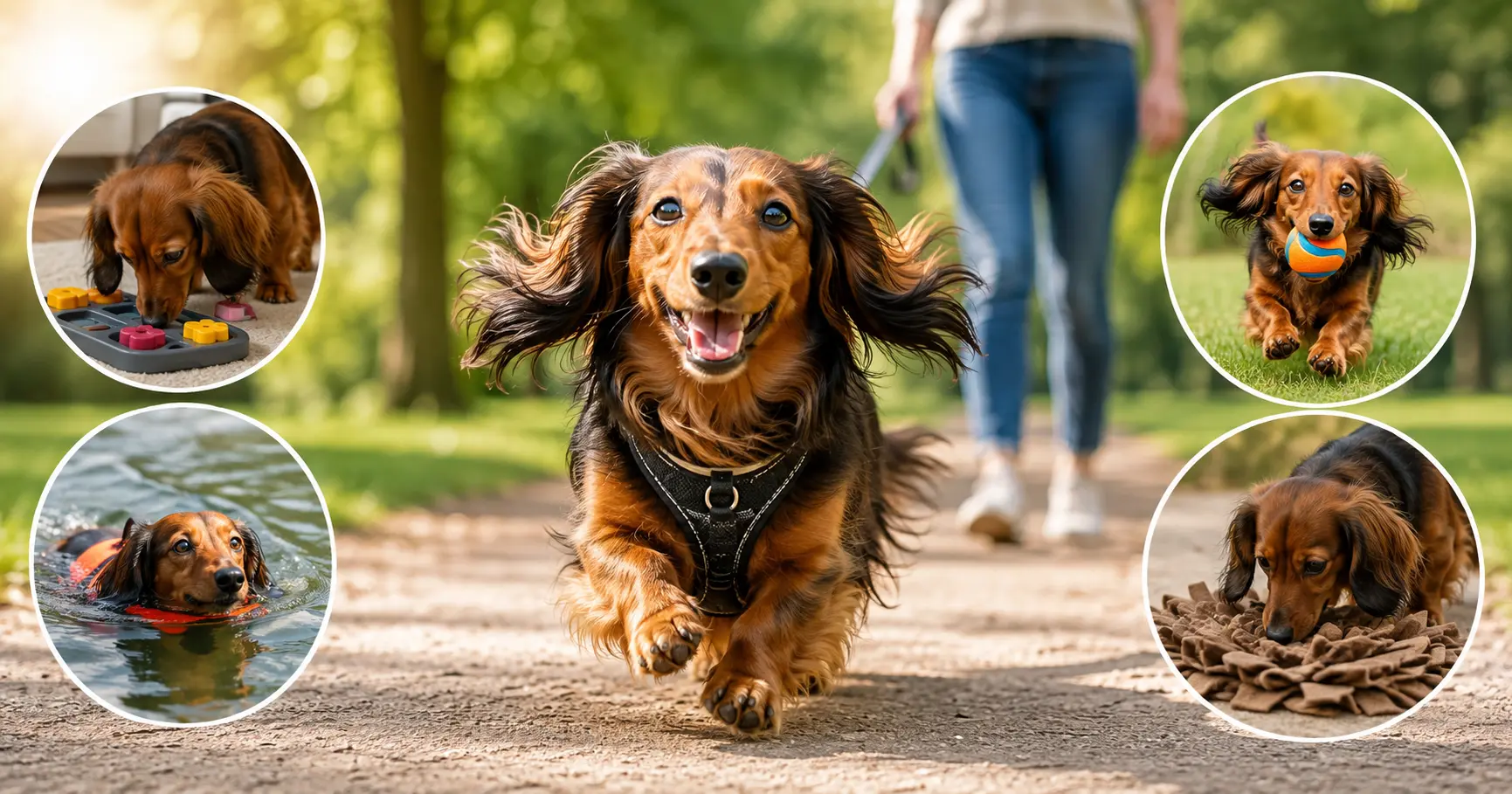
So, how much exercise does a Dachshund really need? And what activities are best for keeping them happy without putting unnecessary strain on their spine?
This guide covers everything you need to know about exercising your Dachshund safely while helping them stay healthy for years to come.
Why Exercise Is Important for Dachshunds

Regular exercise benefits much more than your Dachshund’s muscles.
A healthy exercise routine helps:
- Maintain an ideal body weight
- Strengthen muscles that support the spine
- Improve heart health
- Reduce boredom
- Prevent destructive behaviors
- Boost confidence
- Support mental stimulation
- Encourage better sleep
Without enough activity, many Dachshunds become restless, overweight, or develop unwanted habits like excessive barking or chewing.
The goal isn’t intense workouts—it’s consistent daily movement.
How Much Exercise Does a Dachshund Need?

Every dog is different, but most healthy adult Dachshunds benefit from 30 to 60 minutes of exercise each day.
You don’t need to do it all at once. In fact, splitting activity into two or three shorter sessions is often easier on their joints and back.
A simple routine might include:
- A 20-minute morning walk
- A short play session in the afternoon
- A relaxing evening stroll
Puppies and senior dogs usually need shorter sessions with plenty of rest in between.
Walking: The Best Everyday Exercise

Walking is one of the safest and most effective forms of exercise for Dachshunds.
It keeps them physically fit while satisfying their natural curiosity.
Rather than rushing through a walk, allow your Dachshund time to sniff. Smelling new scents is mentally stimulating and can be just as tiring as physical activity.
Tips for enjoyable walks:
- Use a well-fitted harness instead of attaching the leash to a collar.
- Walk on grass or dirt paths when possible.
- Avoid walking during the hottest part of the day.
- Bring fresh water on longer outings.
- Let your dog set a comfortable pace.
Remember, quality is often more important than distance.
Fun Games to Play at Home

Exercise doesn’t always require a long walk. Indoor games can keep your Dachshund active, especially during rainy days or extreme weather.
Some great options include:
Hide-and-Seek
Hide behind a door or piece of furniture and call your dog’s name.
Most Dachshunds love searching for their favorite person.
Treat Hunt
Hide small dog-safe treats around the house and encourage your Dachshund to sniff them out.
This taps into the breed’s natural hunting instincts.
Puzzle Toys
Interactive feeders and puzzle toys provide mental stimulation while rewarding problem-solving skills.
They’re especially helpful for energetic dogs who need extra enrichment.
Gentle Fetch
Many Dachshunds enjoy retrieving soft toys.
Keep throws short and avoid encouraging sudden jumps or sharp turns.
Swimming: Is It a Good Idea?

Some Dachshunds enjoy swimming, while others would rather stay dry.
If your dog likes water, swimming can be an excellent low-impact exercise because it strengthens muscles without putting pressure on the joints.
However, always:
- Use a properly fitted canine life jacket.
- Supervise closely.
- Introduce water gradually.
- Never force a nervous dog to swim.
Not every Dachshund is a natural swimmer, and that’s perfectly okay.
Exercises to Avoid
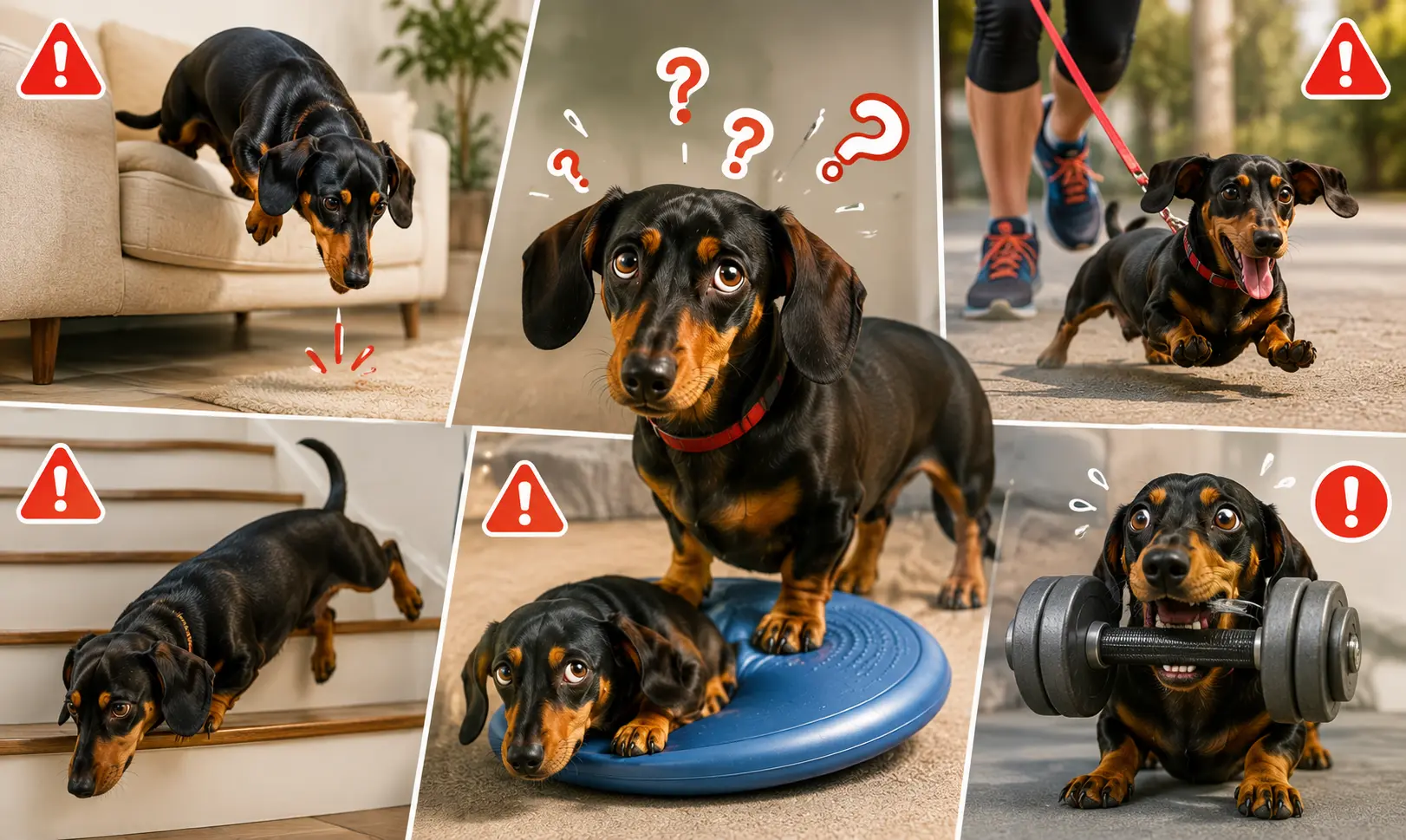
Because of their unique body shape, certain activities increase the risk of back injuries.
Try to avoid:
- Repeated jumping on and off furniture
- Long flights of stairs
- High obstacle courses
- Catching toys in midair
- Running beside a bicycle
- Intense agility training without professional guidance
- Slippery floors that encourage sudden twisting
Protecting your Dachshund’s spine should always come first.
Keep Your Dachshund at a Healthy Weight

One of the biggest benefits of regular exercise is weight management.
Even a small amount of extra weight places additional strain on a Dachshund’s long back and joints.
Combine daily activity with a balanced diet, portion control, and healthy treats to help maintain an ideal body condition.
Your veterinarian can help determine the right weight for your individual dog.
Mental Exercise Is Just as Important

Physical activity alone isn’t enough.
Because Dachshunds are intelligent scent hounds, they enjoy using their brains as much as their bodies.
Great enrichment activities include:
- Snuffle mats
- Nose work games
- Learning new tricks
- Rotating toys weekly
- Food puzzles
- Basic obedience training
A mentally engaged Dachshund is often calmer and more content at home.
Signs Your Dachshund Needs More Exercise

Every dog has different energy levels, but common signs of boredom include:
- Excessive barking
- Digging
- Chewing furniture
- Restlessness
- Constant attention-seeking
- Zoomies throughout the house
If these behaviors appear regularly, try increasing daily activity or adding more enrichment games.
Signs Your Dachshund Has Had Too Much Exercise

Too much exercise can be just as harmful as too little.
Watch for:
- Heavy panting that doesn’t improve with rest
- Limping
- Reluctance to continue walking
- Excessive fatigue
- Shaking
- Difficulty getting up
- Back stiffness
If you notice any of these signs, stop exercising and allow your dog to rest. Contact your veterinarian if symptoms persist or if your Dachshund shows signs of pain.
Exercise Tips for Puppies and Seniors
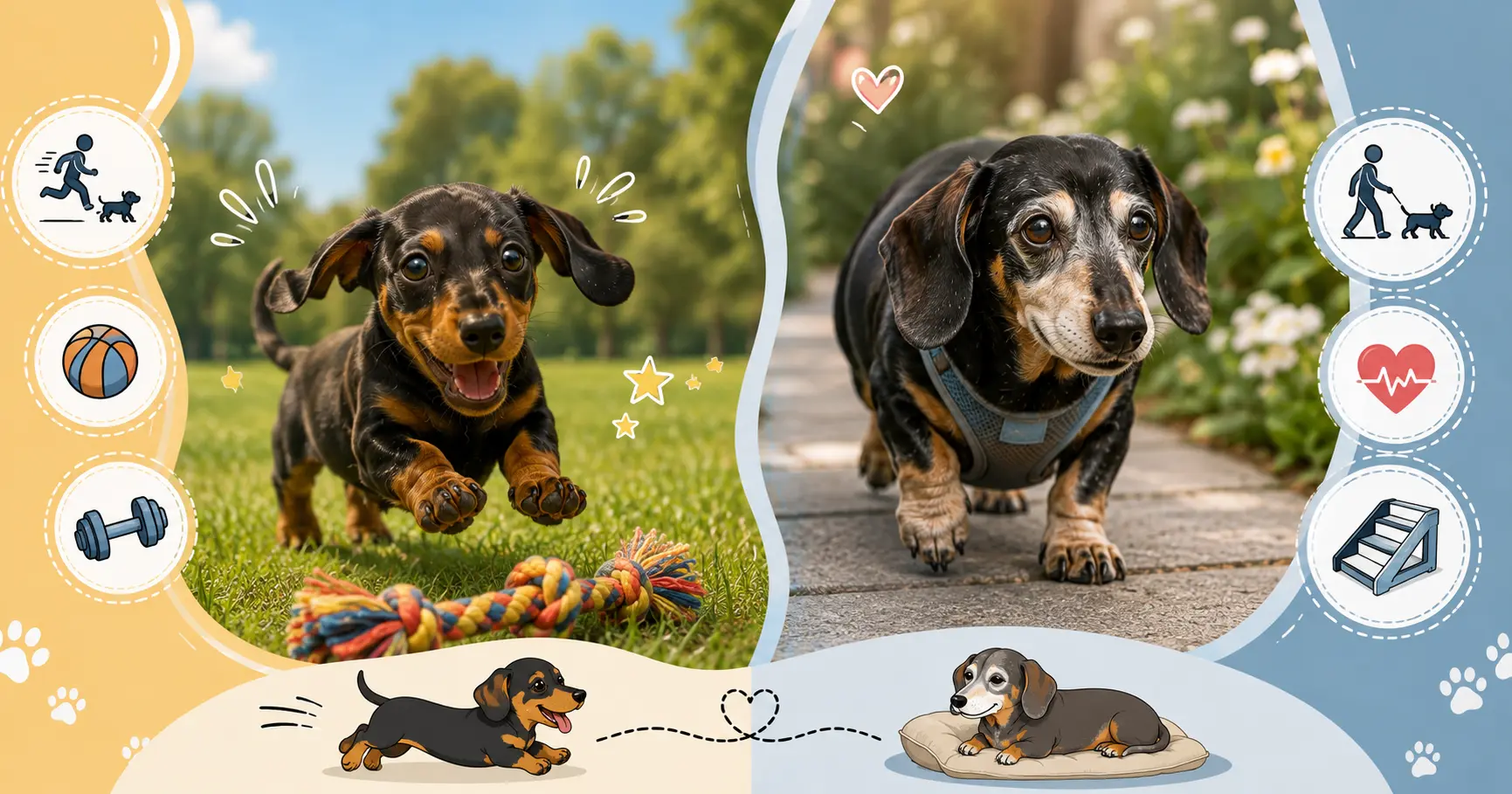
Puppies
Young Dachshunds are full of energy, but their bones and joints are still developing.
Choose:
- Short walks
- Gentle play
- Basic training sessions
- Safe socialization
Avoid repetitive jumping or long-distance walks.
Senior Dachshunds
Older dogs still benefit from daily movement.
Focus on:
- Gentle walks
- Stretching naturally through play
- Comfortable pacing
- Frequent rest breaks
Regular activity can help maintain mobility and reduce stiffness.
Build an Exercise Routine

Dogs thrive on consistency.
A simple daily routine might look like this:
Morning: 20-minute walk and breakfast
Afternoon: Puzzle toy or scent game
Evening: Relaxed walk followed by quiet family time
Keeping a regular schedule helps your Dachshund know what to expect and supports both physical and emotional well-being.
Final Thoughts
Exercise is one of the best gifts you can give your Dachshund. It supports a healthy weight, strengthens muscles, keeps the mind active, and helps prevent many common behavior problems. The key is choosing activities that match your dog’s age, personality, and physical needs while protecting their long back from unnecessary strain.
Whether it’s a leisurely walk through the neighborhood, a game of hide-and-seek in the living room, or a sniff-filled adventure at the local park, regular movement helps your Dachshund live a happier and healthier life.
Remember, every Dachshund is unique. Some are energetic explorers, while others are content with a slower pace. Pay attention to your dog’s comfort level, adjust activities as needed, and enjoy the time you spend together. After all, the best exercise routine is one that keeps both you and your little sausage dog smiling.