
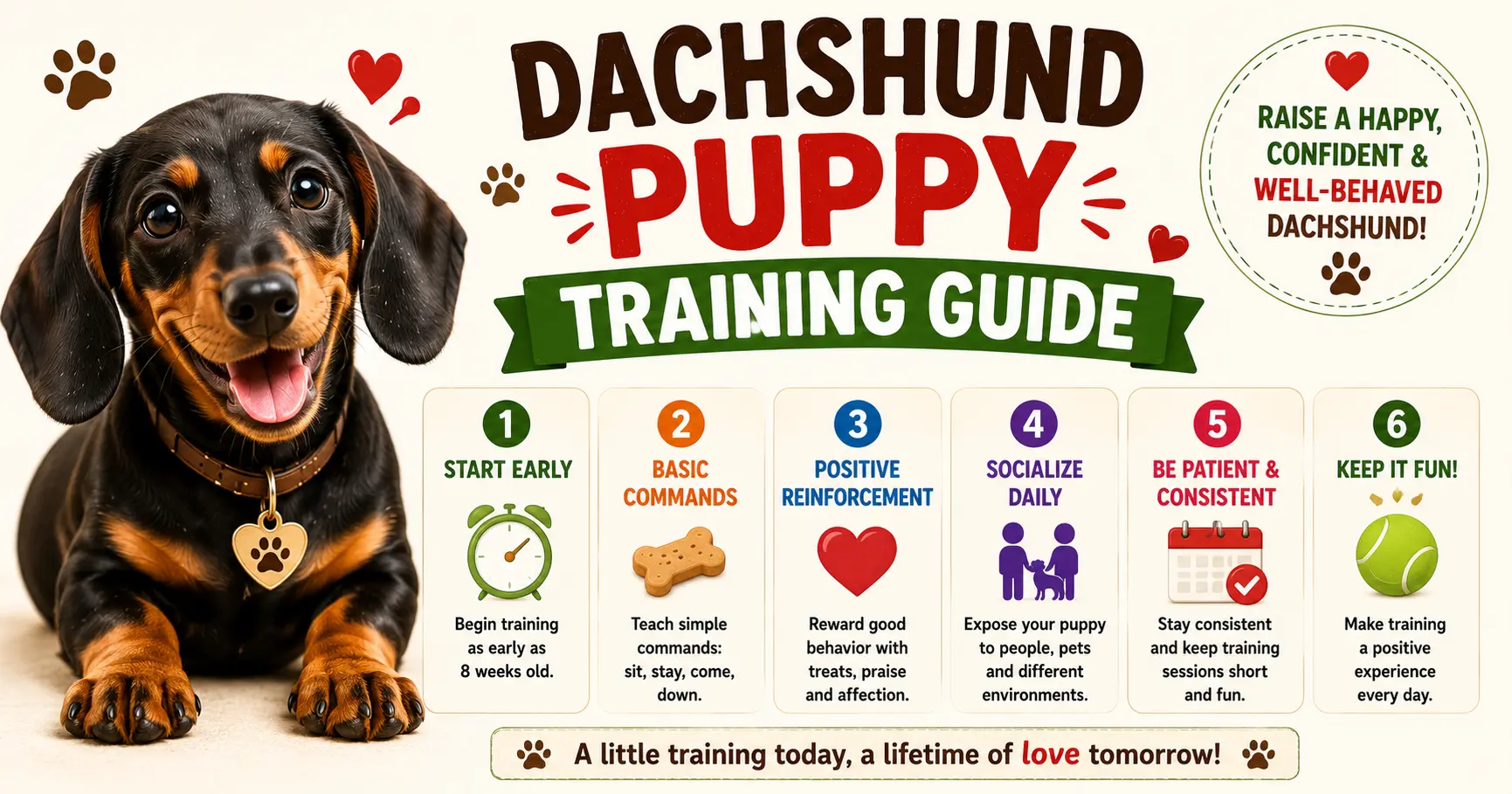
Bringing home a Dachshund puppy is one of the greatest joys for a dog lover. Sure, these small dogs have short legs, but they have huge personalities. They’re loving, playful, curious, and surprisingly smart. However, Dachshunds are also somewhat stubborn, so training them requires patience and consistency. The good news is that once you understand how they think, training becomes much easier.
This guide covers a wide range of steps for the new owner starting with their dog, from house training to using basic commands in training and social interactions.
Many believe puppies should settle into their new home before training begins. In reality, training starts as soon as your Dachshund walks through the door. Puppies are learning constantly, whether or not you are intentionally teaching them.
Keep your expectations realistic. A newborn puppy shouldn’t master everything in its first few days of life, but it can start learning simple habits right away. Short mini workouts of five to ten minutes are better than a long session that either bores or frustrates your puppy.
Building A Daily Schedule

Dachshund puppies enjoy consistency. Feeding time, potty breaks, walks, naps, and sitting still before bed should all occur at the same time every day. Having a predictable routine keeps your puppy aware of what’s expected of him and decreases the likelihood of unwanted behavior.
Take your puppy outside first thing in the morning, around breakfast and dinner, after napping and playing, and before bed too. The less uncertain you are, the more quickly your dog will figure out where to go.
Encourage Positive Behavior

Dachshunds respond much better to rewards than to punishment. Reward your puppy immediately with praise, a small treat, or their favorite toy every time they follow a command or go outside to potty.
Timing matters. Rewards for behavior should occur within a couple of seconds so that your puppy can readily associate the behavior with the reward. They may not understand what they did correctly if you wait too long.
Mistakes do not require confrontation with yelling; don’t yell or punish them. Fear doesn’t produce a confident dog; it creates confusion.
Teach Simple Commands First
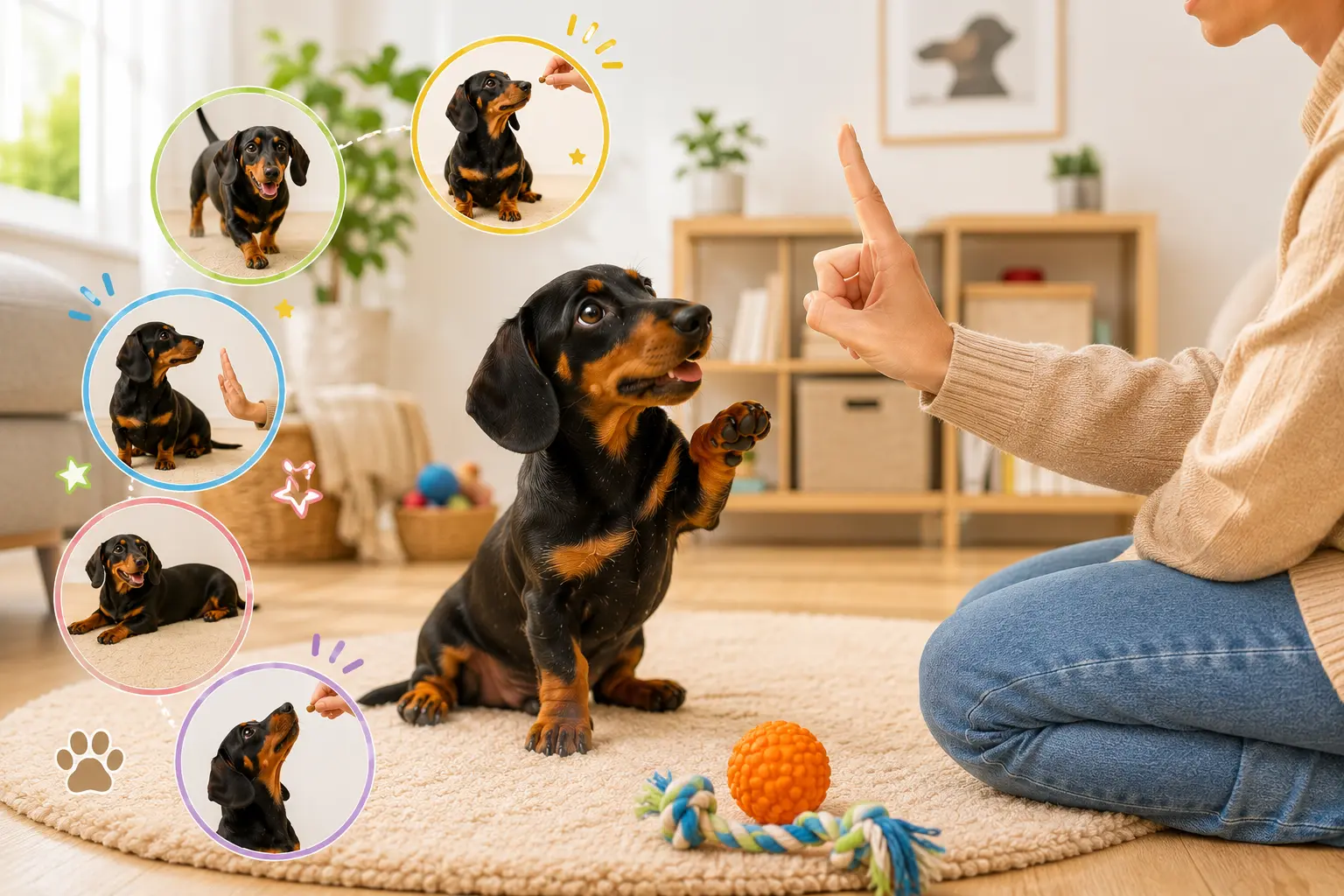
Before you get into advanced tricks, focus on the commands your Dachshund will use every day. Start with:
- Sit
- Stay
- Come
- Down
- Leave it
- Drop it
Make sessions entertaining and end them on a positive note. You are making progress if your puppy succeeds even once or twice, and it’s something worth celebrating.
Potty Training Takes Time

One of the common challenges with Dachshunds is house training. They have an independent personality and such a small bladder. It can slow things down quite a bit.
Select one potty area outdoors and always take your puppy there. Use the same cue, like “Go potty,” each time. Provide immediate praise and treats when you reward success immediately.
Accidents are completely normal. Use an enzymatic cleaner to clean them up — and don’t punish them. Most Dachshunds will learn to rely on people by being consistently trained and encouraged.
Socialization Is Just as Important
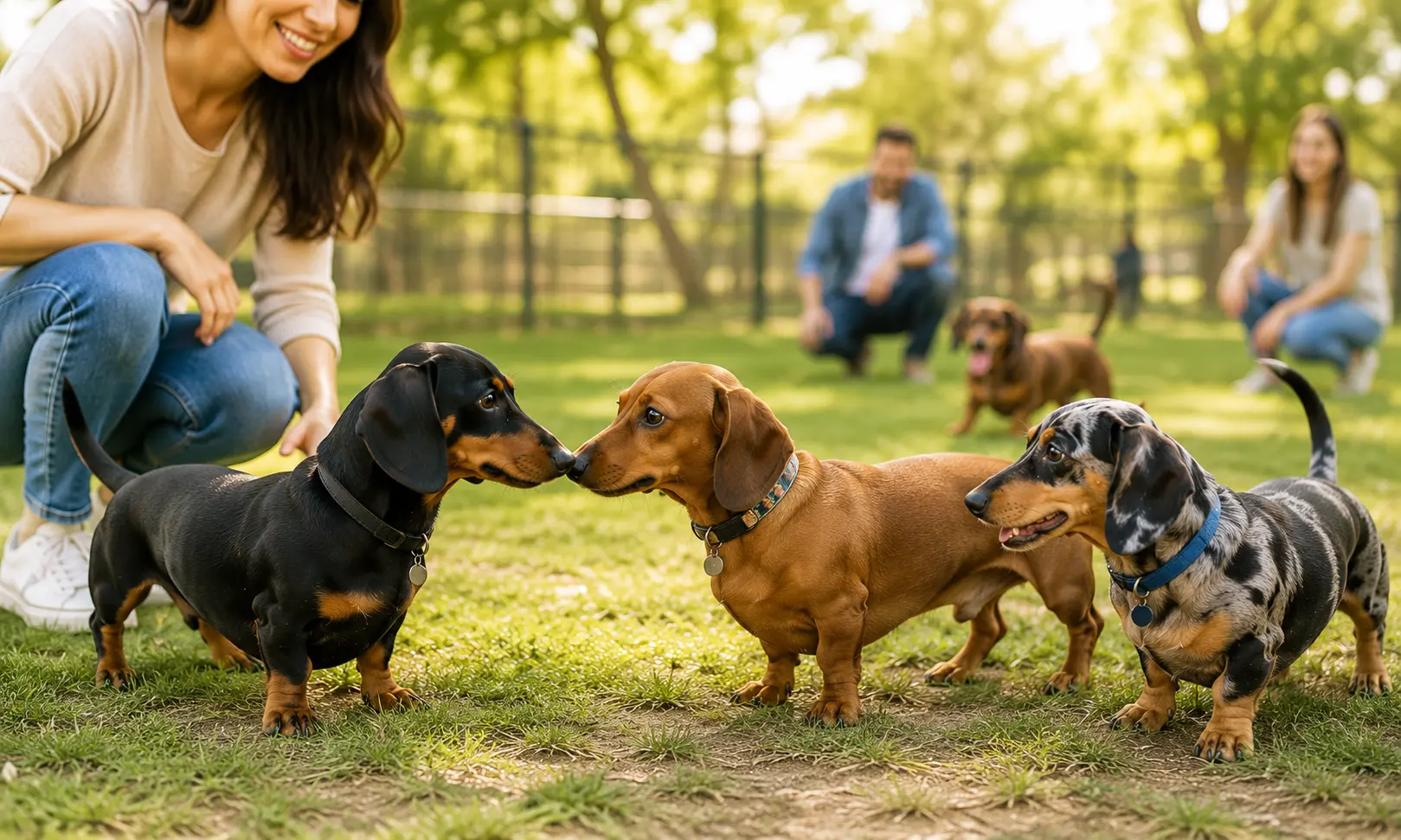
Training isn’t just about commands. Helping your puppy become comfortable with people, dogs, sounds, and new environments—so they can better adapt to them—is also important.
You want your Dachshund to be exposed to different things gradually. Allow them to play alongside friendly dogs, walk on different surfaces, hear common household sounds, and ride in a car. Positive experiences in puppyhood protect against future fear and anxiety in adulthood.
Always ensure socialization is safe and appropriate for your puppy’s age before they’ve had all recommended vaccinations.
Avoid Common Problems in Behavior
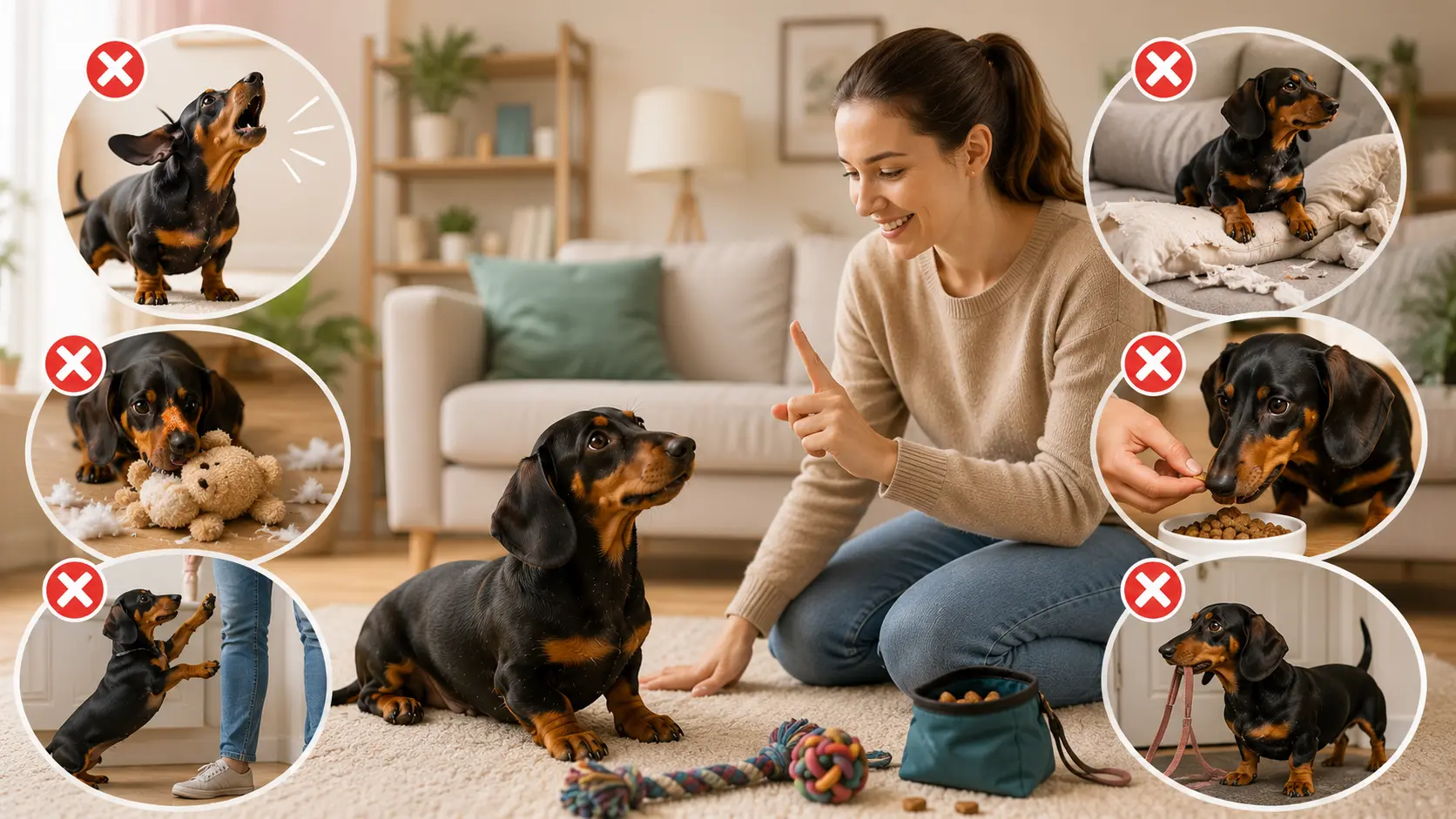
Dachshunds are smart enough to create their own entertainment if they get bored. It’s when a dog has too much energy — or not enough mental stimulation — that chewing, digging, excessive barking, and stubborn behavior often occur.
Puzzle toys, sniffing games, short walks, and simple obedience training — all will keep your puppy occupied. A mentally tired Dachshund is a well-behaved Dachshund.
Crate Training Is A Good Tool
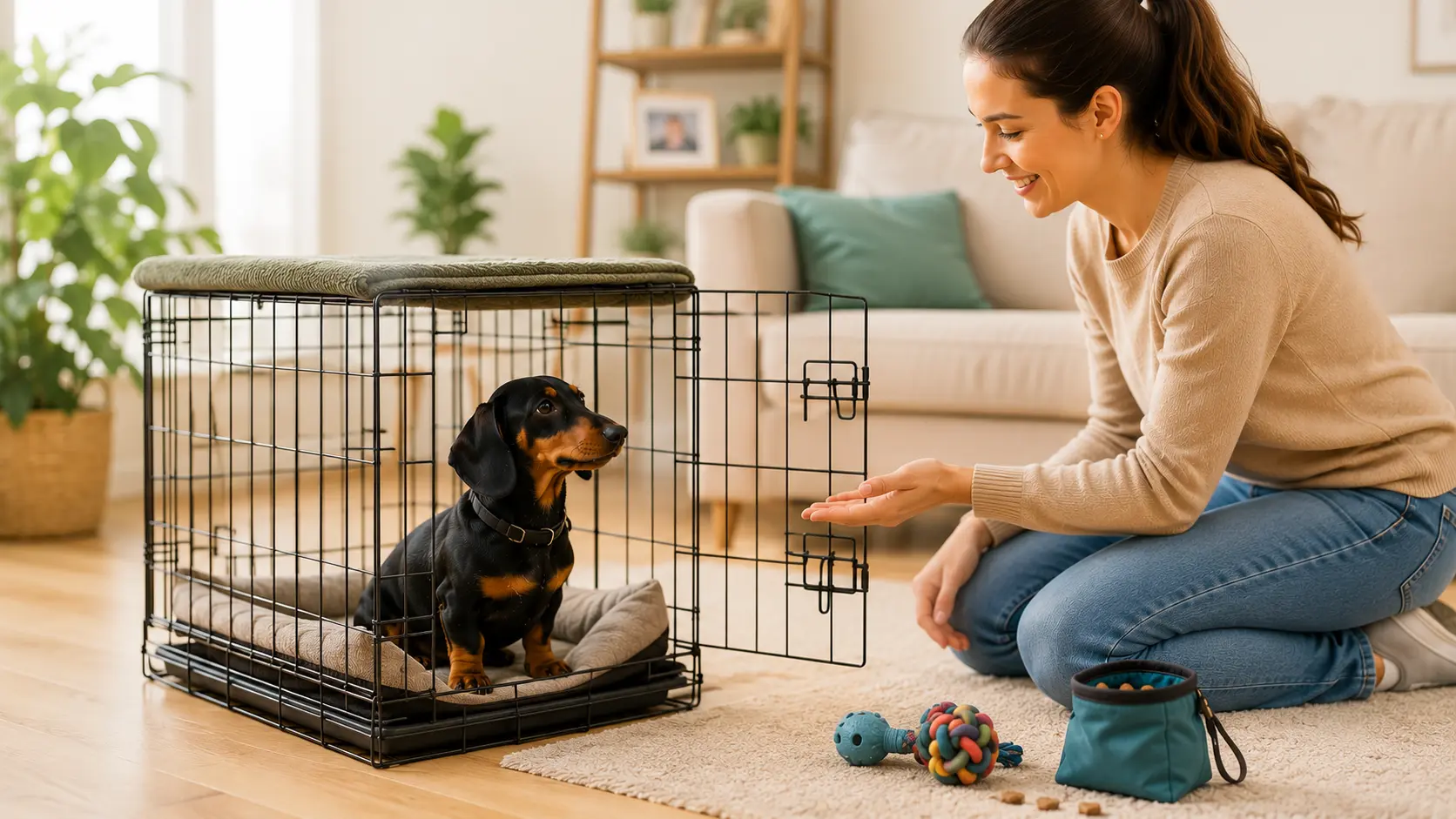
A properly introduced crate offers your puppy a safe space to relax while also providing opportunities for potty training.
Select a crate that is big enough for your puppy to stand up, turn around, and lie comfortably. Make it inviting with a plush blanket and a favorite toy.
Never use the crate as punishment. Your Dachshund should view it as their own bedroom instead of a place to dread.
Stay Patient and Consistent
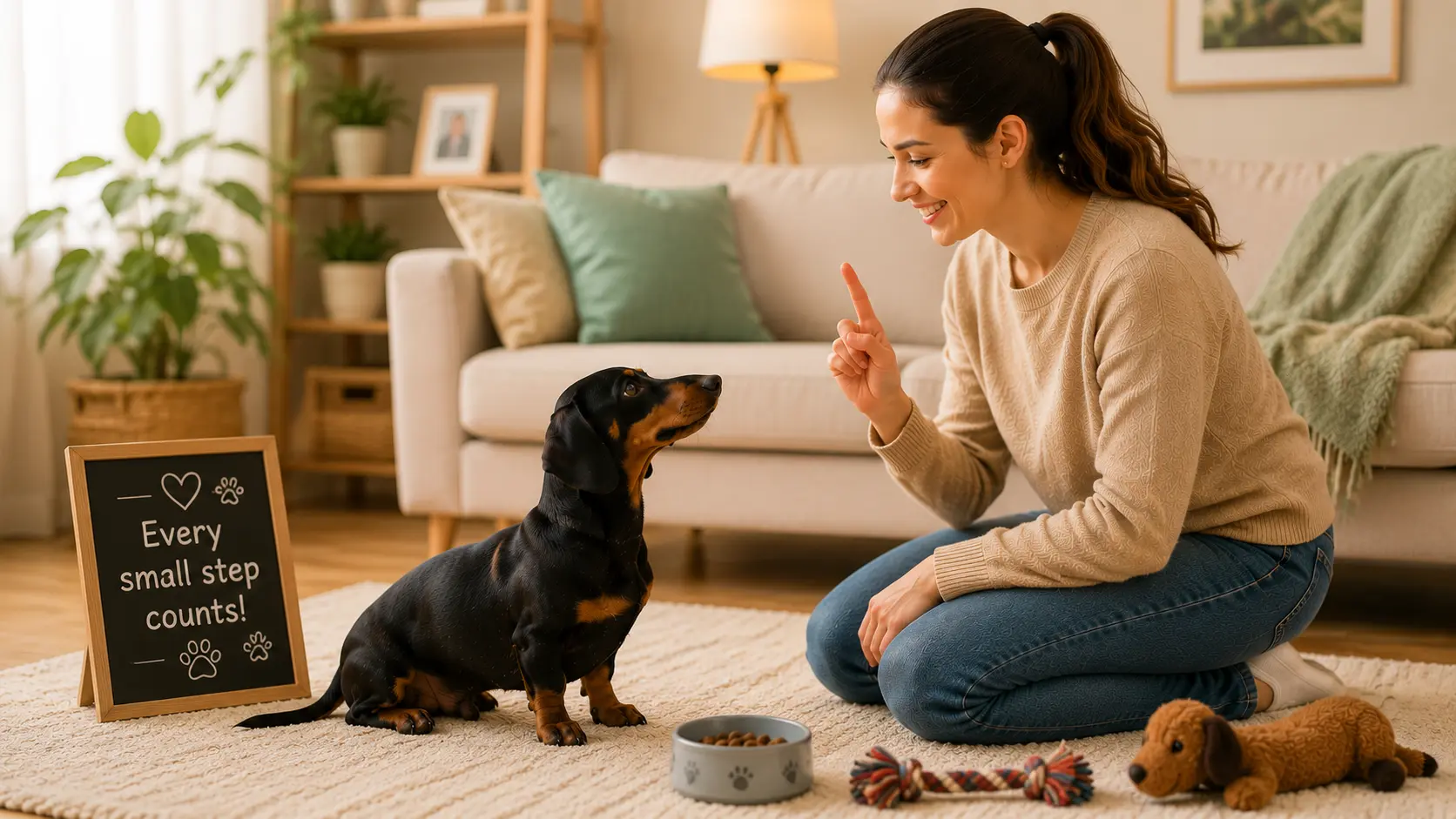
Each Dachshund learns at their own pace. Some puppies grasp commands in less than three days; others need a few weeks before it all clicks.
Successful owners remain calm and consistent by celebrating small improvements or changes rather than expecting perfection. It isn’t simply a matter of training a puppy into an amazing dog overnight — it is also about building trust and communication over time.
Final Thoughts
Raising a Dachshund puppy is rewarding but challenging. A dog is one of the most dynamic animals on the planet, exhibiting a playful and loyal personality and inquisitive nature, making them amazing companions, but requiring patience and regular training.
Building a permanent foundation based on daily routines, using positive reinforcement, and gradually introducing new experiences.
Just remember that every training session is an opportunity to strengthen your bond. Through kindness, consistency, and a little bit of patience, your Dachshund puppy will become a confident, well-mannered companion that will bring joy to you and your family for many years to come.